
"No Criminal Charges" Doesn't Mean Nothing Happened
When a family learns that prosecutors won't be filing charges after their child was harmed, the message they often hear is devastating: It's over. Nothing can be done. Nobody will be held accountable.
That message is wrong.
One of the most common misconceptions we encounter in institutional investigations is the belief that if law enforcement declines to file criminal charges, the matter is closed.
It isn't.
A decision not to prosecute does not mean misconduct didn't occur. It means prosecutors concluded they could not prove a criminal offense based on the available evidence. But schools have different responsibilities, different legal standards, and different goals than the criminal justice system.
Criminal Investigations and School Investigations Serve Different Purposes
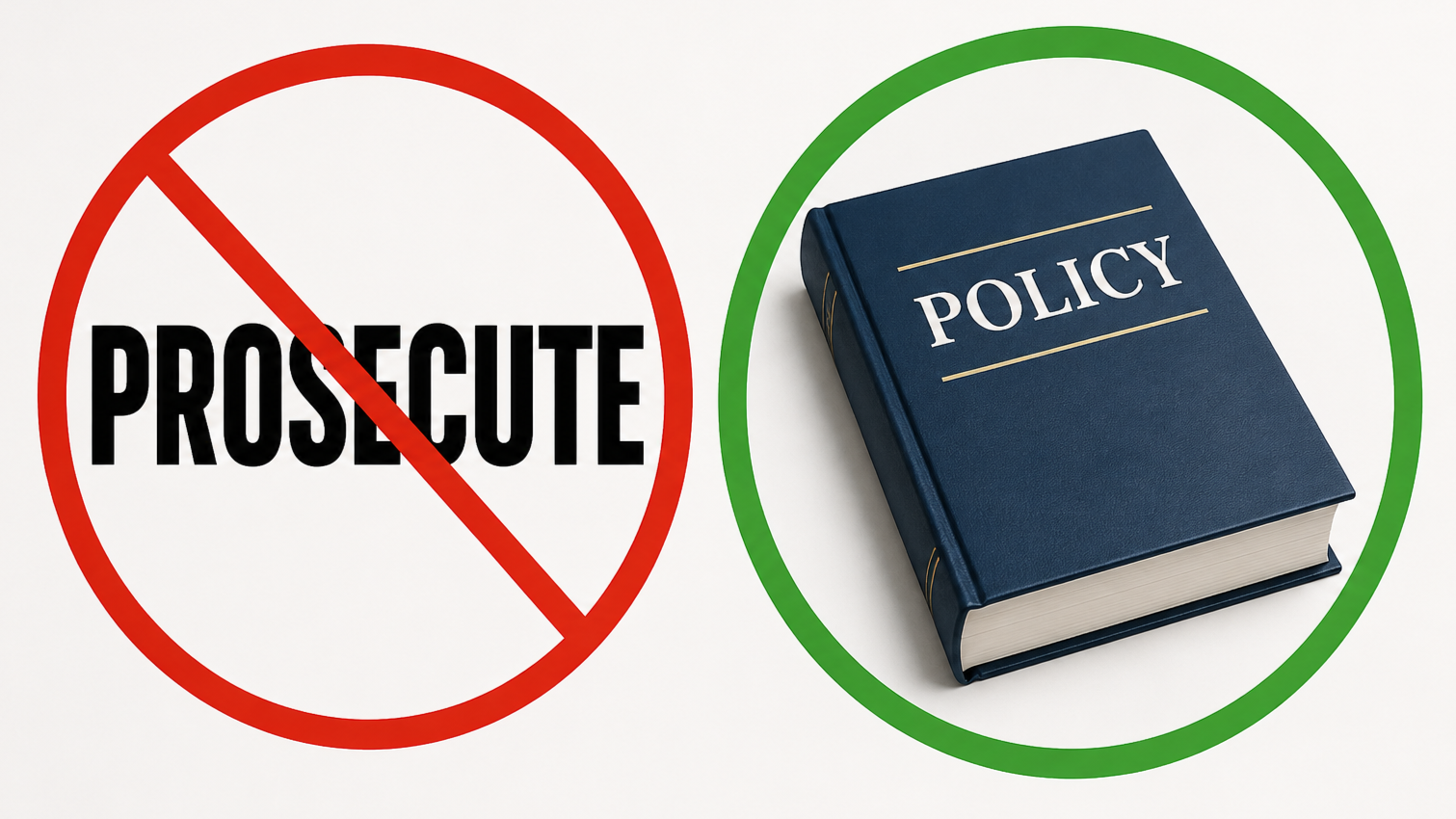
Law enforcement investigates whether a crime can be proven in court. Schools investigate whether an employee violated policy, professional boundaries, ethical expectations, or federal and state laws governing student safety.
Those questions often overlap, but they are not the same.
Many forms of staff misconduct may not be criminal, including:
Boundary violations
Inappropriate communications
Favoritism or grooming behaviors
Failure to maintain professional relationships
Conduct that creates an unsafe or hostile educational environment
Any one of these behaviors may justify school intervention, even if no criminal statute was violated.
The Burden of Proof Is Different
In a criminal prosecution, the government must prove guilt beyond a reasonable doubt. That is the highest legal standard in our justice system.
Schools generally make decisions using a lower standard. Depending on the issue and applicable law or policy, decisions are often based on whether it is more likely than not that the conduct occurred or whether policy was violated.
That difference matters.
Evidence that is insufficient to support a criminal conviction may still be more than sufficient for a school district to conclude that misconduct occurred or that an employee should no longer supervise students.
Prosecutors Consider More Than Whether Something Happened
When prosecutors review a case, they evaluate many factors beyond whether they believe misconduct occurred.
For example:
Is there sufficient admissible evidence to obtain a conviction?
Are key witnesses willing or able to testify?
Did the conduct satisfy every element of the criminal statute?
Are there constitutional or evidentiary issues that weaken the case?
A prosecutor may believe concerning conduct occurred but still decline charges because the evidence is unlikely to meet the criminal burden of proof.
That decision should not be interpreted as an exoneration.
Schools Have an Independent Duty
Schools cannot outsource student safety to the criminal justice system.
Even when law enforcement is involved, schools remain responsible for determining whether an employee violated district policy, Title IX obligations, professional expectations, licensing requirements, or state reporting laws.
The goal of a thorough, impartial school investigation is not to determine criminal guilt. Its purpose is to determine what happened, assess risk, and make informed decisions to protect students and the school community. Waiting for a criminal case, or relying entirely on its outcome, can unnecessarily delay protective measures and expose students to additional risk.
The Bottom Line
"No criminal charges" should never be treated as shorthand for "nothing happened." Likewise, a criminal conviction is not required before a school or other youth-centered institution takes appropriate action.If prosecutors decline to file charges, that decision reflects the limits of the criminal system, not the truth of what happened to a child victim.
The question for institutions is not whether a prosecutor can prove a crime beyond a reasonable doubt. Rather, the question is whether the available evidence demonstrates that misconduct most likely ocurred, and student safety obligations were violated.
Understanding the difference is essential to maintaining a safe environment for every child.
Looking for more guidance? Check out our Response Guide for Staff Arrests, a clear, written plan that spells out immediate decisions, notifications, and responsibilities for school leaders to use after a staff member is arrested for alleged criminal conduct.

Our Response Guide for Staff Arrests is a clear, written plan that spells out immediate decisions, notifications, and responsibilities for school leaders to use after a staff member is arrested for alleged criminal conduct on or off campus.
Most importantly, this Guide explains how to conduct a Red Flags Check—an internal review of personnel files, past complaints, background checks, disciplinary history, and feedback from supervisors, colleagues, and students.
Our 17-page Response Guide for Staff Arrests provides exactly that. Inside, you’ll find:
A structured framework for documenting arrest and arrestee information
Guidance on who to interview and what practical questions to ask
Tools for gathering meaningful input and observations from your school community
This approach not only ensures an effective response in the moment but also strengthens long-term safeguards, helping protect both students and the integrity of the school community.
