
Does Your School Website Comply with Title IX Requirements?
Why Website Compliance Matters
For many families, a school’s website is the first place they go when they need help, want to report a concern, or seek reassurance that their child’s school is safe. That’s why The U.S. Department of Education’s Office for Civil Rights (OCR) requires schools and districts to make certain information easily accessible online. These requirements apply to every district and school receiving federal funds, regardless of size or enrollment.
Failure to meet these standards can lead to findings of noncompliance, OCR investigations, delayed or missing reports, and loss of community trust, among others. In short, website compliance isn’t just a legal requirement, it’s a key part of transparency, accessibility, and safety.
Federal Website Requirements
Under Title IX, every public school district and many private schools are required to display specific information prominently on their website so staff, students, and families know their rights, how to report concerns, and who to report them to. In fact, it is recommended that TIX information be clearly and easily accessible within one or two clicks of the homepage.
At a minimum, these requirements include:
➡️ Title IX Coordinator Information
➡️ Non-Discrimination Statement
➡️ Grievance Procedures
➡️ Training Materials
What the Data Shows
We looked at 159 district websites in Cook County, Illinois. While most websites have a lot of valuable information, some took as many as 10 or more clicks to reach the Title IX information, while we were unable to find this required information at all on other websites.
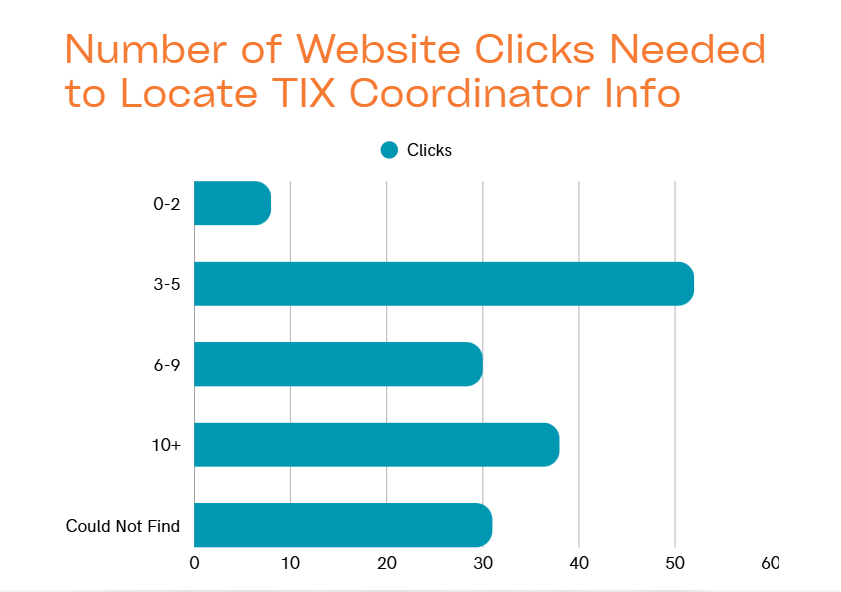
62% of District websites required 6+ clicks to locate any TIX information - or the information could not be located at all.
19% of District websites required 6-9 clicks to locate any TIX information.
24% of District websites required 10 or more clicks to locate TIX information.
20% of District websites did not include any TIX information or it was buried so deep it could not be located.
We also identified several repeat compliance gaps:
➢ Missing or outdated Title IX Coordinator information
➢ Policies buried deep within PDF handbooks or Board policies instead of public pages
➢ Inaccessible or non-functioning reporting links
➢ No clear path for submitting anonymous concerns or accessing grievance procedures
These gaps not only create legal risk, but also undermine confidence and discourage reporting by making it hard for those impacted by potential misconduct to easily find answers while navigating a difficult and sensitive situation.
A truly prominent and comprehensive Title IX page sends a clear message: We take safety seriously.
How Campus Integrity Group Can Help
Campus Integrity Group (CIG) conducts independent website compliance reviews for K–12 schools and districts nationwide. Our reviews assess:
Title IX postings
State-specific content requirements
Reporting mechanisms and visibility
Policy and grievance accessibility
Expectations for maintaining professional boundaries
Outdated language
Navigation issues
We then provide a detailed compliance summary and practical action plan to bring your site up to standard. This ensures your district not only meets federal requirements, but also strengthens trust and transparency within your school community.
