The Language of Title IX: Child-Centered Considerations in K–12
Title IX compliance isn’t just about timelines and procedures. It’s also about language.
The words used in Title IX policies, notices, investigations, and conversations aren’t just technical terms. They carry specific legal meaning, shape expectations for all parties involved, and directly influence whether a school’s response is compliant, fair, and defensible. In K–12 settings, where schools serve minors and operate under mandatory reporting laws, those words can have even greater impact.
While many Title IX terms are shared across K–12 and higher education, their application is fundamentally different. Understanding that distinction is essential for responding appropriately, supporting students, and avoiding common compliance missteps.

K–12 schools and colleges do not operate under the same assumptions. Higher education models are designed for adults. K–12 Title IX responses must account for:
Student age and developmental level
Parent/guardian involvement
Mandatory reporter obligations
Child safety and supervision concerns
Using the right words , and using them correctly, helps ensure responses are both compliant and appropriate for minors.
Key Roles in the K–12 Title IX Process
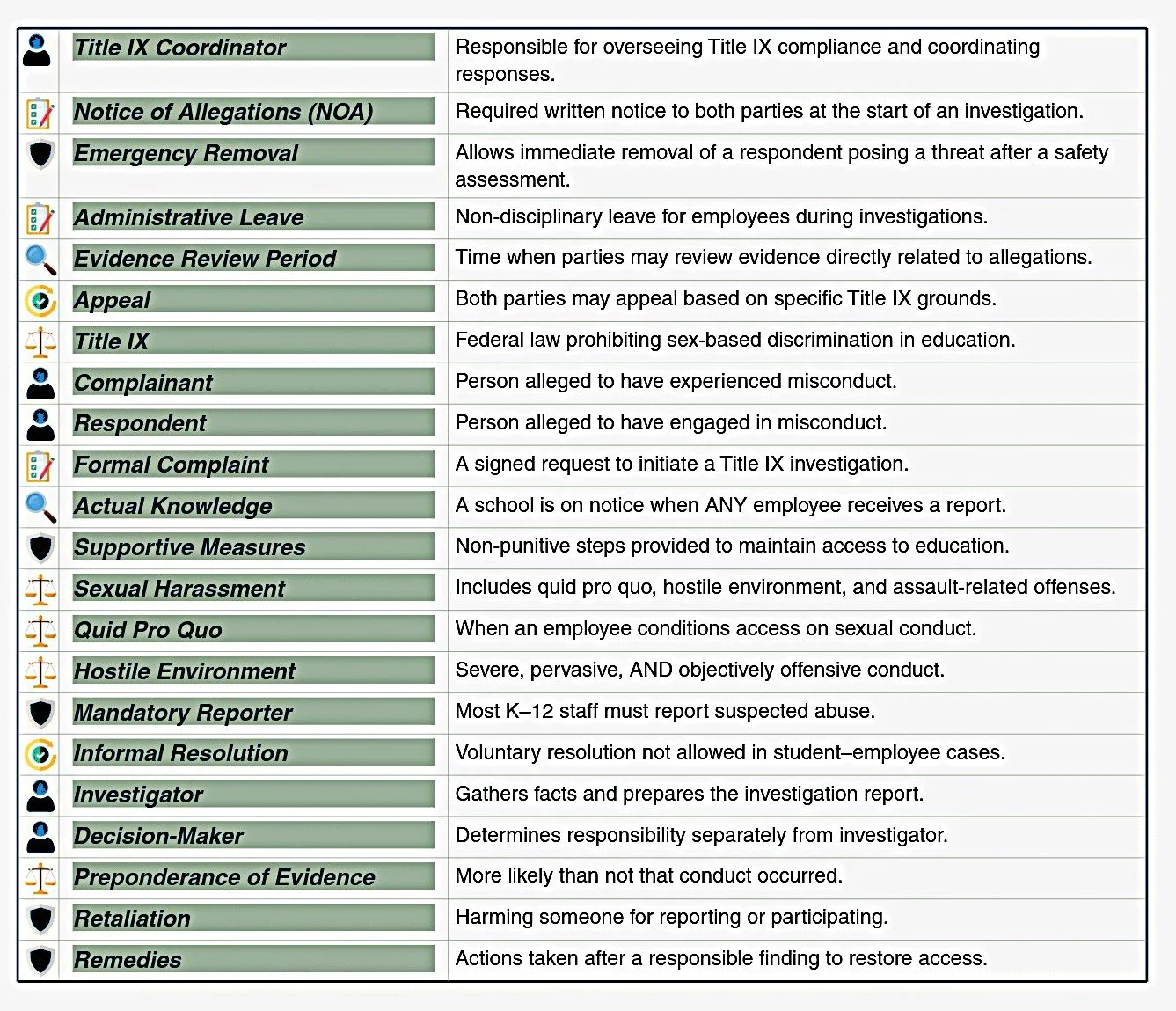
Title IX Coordinator
In K–12 schools, the Title IX Coordinator plays a critical, hands-on role in overseeing compliance and coordinating the school’s response. This includes ensuring proper notice, offering supportive measures, coordinating with administrators, and maintaining documentation.
Investigator
The investigator gathers facts, interviews parties and witnesses, and prepares the investigation report. This role is limited to fact-finding, not determining responsibility.
Decision-Maker
The decision-maker determines responsibility based on the evidence, separate from the investigator. This separation is essential for fairness and due process.
Reports, Complaints, and Notice — Where K–12 Differs Most
Actual Knowledge
In K–12 settings, schools are generally considered “on notice” when any employee receives a report of potential Title IX misconduct. This aligns with mandatory reporter laws and child protection obligations. Schools cannot rely on narrow reporting channels or assume informal disclosures don’t trigger obligations.
Formal Complaint
A formal complaint is a signed request to initiate a Title IX investigation. Not every report becomes a formal complaint, but schools still have a duty to respond, assess safety, and offer supportive measures.
Notice of Allegations (NOA)
Written notice to both parties at the start of an investigation is required. In K–12 schools, delays or omissions in notice are a frequent compliance issue.
Safety and Support in a Minor-Centered Environment
Supportive Measures
Supportive measures are non-punitive steps designed to maintain access to education. In K–12 schools, these measures often involve parents or guardians and must be age-appropriate.
Emergency Removal
Emergency removal allows immediate action when a respondent poses a threat after a safety assessment. Because K–12 schools must prioritize student supervision and safety, these decisions arise more frequently and must be carefully documented.
Administrative Leave
For employees, administrative leave is a non-disciplinary measure during an investigation. Language matters here: it should never be framed as punishment or a finding.
Substantive Standards Every K–12 Team Should Understand
Sexual Harassment
Under Title IX, sexual harassment includes quid pro quo harassment, hostile environment harassment, and certain sexual assault–related offenses.
Quid Pro Quo
This occurs when an employee conditions access to an educational benefit on sexual conduct, a particularly serious concern in K–12 settings due to power imbalances.
Hostile Environment
Conduct must be severe, pervasive, and objectively offensive to deny equal access to education. Each element matters, and schools should avoid shortcut conclusions.
Preponderance of the Evidence
This is the standard of proof in Title IX cases, meaning it is more likely than not that the conduct occurred.
Resolution, Appeals, and Post-Investigation Steps
Informal Resolution
In K–12 schools, informal resolution is not permitted in student–employee cases. This is a common area of misunderstanding and risk.
Evidence Review Period
Both parties must have an opportunity to review evidence directly related to the allegations before a final determination is made.
Appeal
Both parties may appeal based on specific Title IX grounds.
Remedies
Remedies are actions taken after a finding of responsibility to restore or preserve access to education.
Retaliation
Any adverse action against someone for reporting or participating in a Title IX process is strictly prohibited.
Why Language Matters So Much in K–12
Misusing Title IX terminology can:
Confuse students and families
Undermine trust in the process
Lead to procedural errors
Create legal and compliance exposure
For K–12 schools, precision in language is not just about compliance, it’s about student safety, transparency, and fairness.
Final Thought
While Title IX terminology may look the same across educational settings, K–12 schools must apply it through a child-centered lens. Understanding both the words and their proper application helps schools respond effectively.
If your district or school would benefit from training, policy review, or independent support navigating Title IX in a K–12 environment, Campus Integrity Group is here to help.
Below is a quick-reference Title IX language cheat sheet designed specifically for K–12 schools.